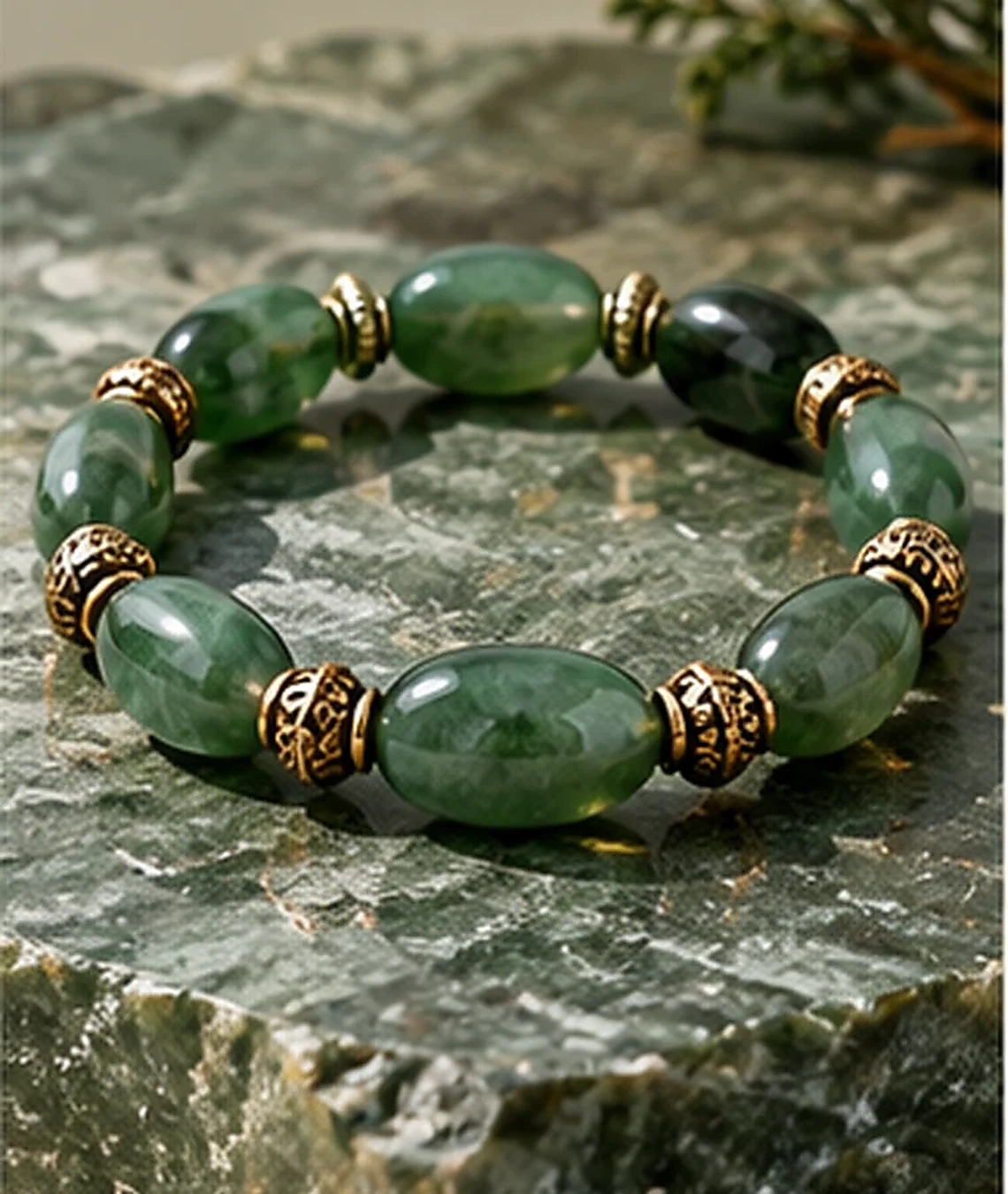
Five Elements crystal jewelry works best when symbolism, color and everyday wear are considered together. The supplied traditional reference uses white and yellow for Metal, black and white for Water, green and black for Wood, red and green for Fire, and yellow and red for Earth. These pairings create a clear design starting point, but they are not mineral-identification rules or guaranteed outcomes.
Five Elements color reference
| Element | Reference colors | Possible visual materials* | Overall mood |
|---|---|---|---|
| Metal | White, yellow | Clear quartz look, pale moonstone look, yellow quartz look, gold-tone spacers | Clean, bright and precise |
| Wood | Green, black | Green aventurine look, mossy inclusions, dark onyx look | Fresh, organic and grounded |
| Water | Black, white | Black obsidian look, smoky tones, clear or white accents | Deep, fluid and calm |
| Fire | Red, green | Carnelian look, red agate look, green accent beads | Vivid, expressive and active |
| Earth | Yellow, red | Amber-gold tones, tiger’s-eye look, warm red accents | Warm, stable and substantial |
*“Look” describes a visual direction only. Color cannot confirm a mineral. Always read the product’s actual material and treatment disclosure.
Metal bracelet palette
Begin with clear, white or softly luminous beads, then add a small yellow or gold-tone focal point. This palette looks refined in 6–10 mm beads and layers easily with neutral clothing. Ask whether pale beads are natural minerals, treated materials or glass because photographs alone may not show the difference.
Wood bracelet palette
Combine two or three greens rather than using a single flat shade. A dark bead can anchor the composition while translucent green beads create visual depth. Wood-themed jewelry often works well with natural textures, but wooden spacers and mineral beads require different care.
Water bracelet palette
Use black or smoky beads as the base and add white or clear beads to keep the bracelet from appearing visually heavy. A small blue accent can suggest movement even though blue is not one of the two colors in the supplied reference. Design traditions vary, so state which version you are following.
Fire bracelet palette
Warm red, orange-red and translucent rose tones create the main energy of a Fire palette. Green accents introduce contrast and prevent the design from becoming monochromatic. If a bright red bead is important, ask whether it is naturally colored, dyed or heat-treated.
Earth bracelet palette
Layer honey, golden yellow, brown and warm red. Tiger’s-eye-like banding or amber-colored translucency can add richness, but names such as “amber,” “jade” and “crystal” should be verified rather than assumed from appearance.
How to combine two elements
Choose one dominant element for roughly two-thirds of the visual palette and use the second as an accent. Repeating the accent in two or three places creates rhythm. If the bracelet represents two people or two intentions, use a clear focal divider rather than mixing every color equally.
How to avoid a costume-like result
- Limit the design to two main colors and one metal finish.
- Repeat one bead size for visual calm and use a larger focal bead only when desired.
- Match the palette to the wearer’s wardrobe and skin sensitivity.
- Ask for treatment and material disclosure before relying on trade names.
- Measure the wrist and check finished weight before approving the design.
From palette to finished bracelet
If you want to start with a birth year, read the birth-year Five Elements guide. Then choose bead scale with the 4 mm to 18 mm comparison. Five Elements catalog designs are US$70 each, with private customization available.
How this guide was prepared
Author: CC, CRYSTALS ENERGY editorial team. Published: November 2, 2026. Review schedule: Reviewed weekly for sizing accuracy, material wording and responsible presentation of cultural symbolism.
Source basis: Practical sizing data in these guides is adapted from the supplier reference chart supplied for this article series. Five Elements content uses the supplied 60 Jiazi/Na Yin cultural reference. Measurements, bead counts and weights are approximate; meanings are cultural and lifestyle interpretations rather than medical, financial or predictive advice.
Additional reference sources
Frequently asked questions
What colors represent the Five Elements in this guide?
The supplied reference uses white and yellow for Metal, green and black for Wood, black and white for Water, red and green for Fire, and yellow and red for Earth.
Can color identify a genuine crystal?
No. Many minerals, glass and treated materials can share a color. Accurate seller disclosure and, when necessary, gemological testing are more reliable than appearance alone.
Can one bracelet combine two elements?
Yes. Use one element as the dominant palette and the second as a repeated accent for a cohesive design.
Do Five Elements colors guarantee luck or balance?
No. The colors are a cultural and personal-reflection framework. They do not guarantee health, wealth, relationships, protection or future outcomes.
Explore Five Elements Crystal Bracelets
Browse five complete catalog collections. Each bracelet is US$70, and private customization is available for wrist fit, bead size and color direction.
View US$70 catalogs & customization →