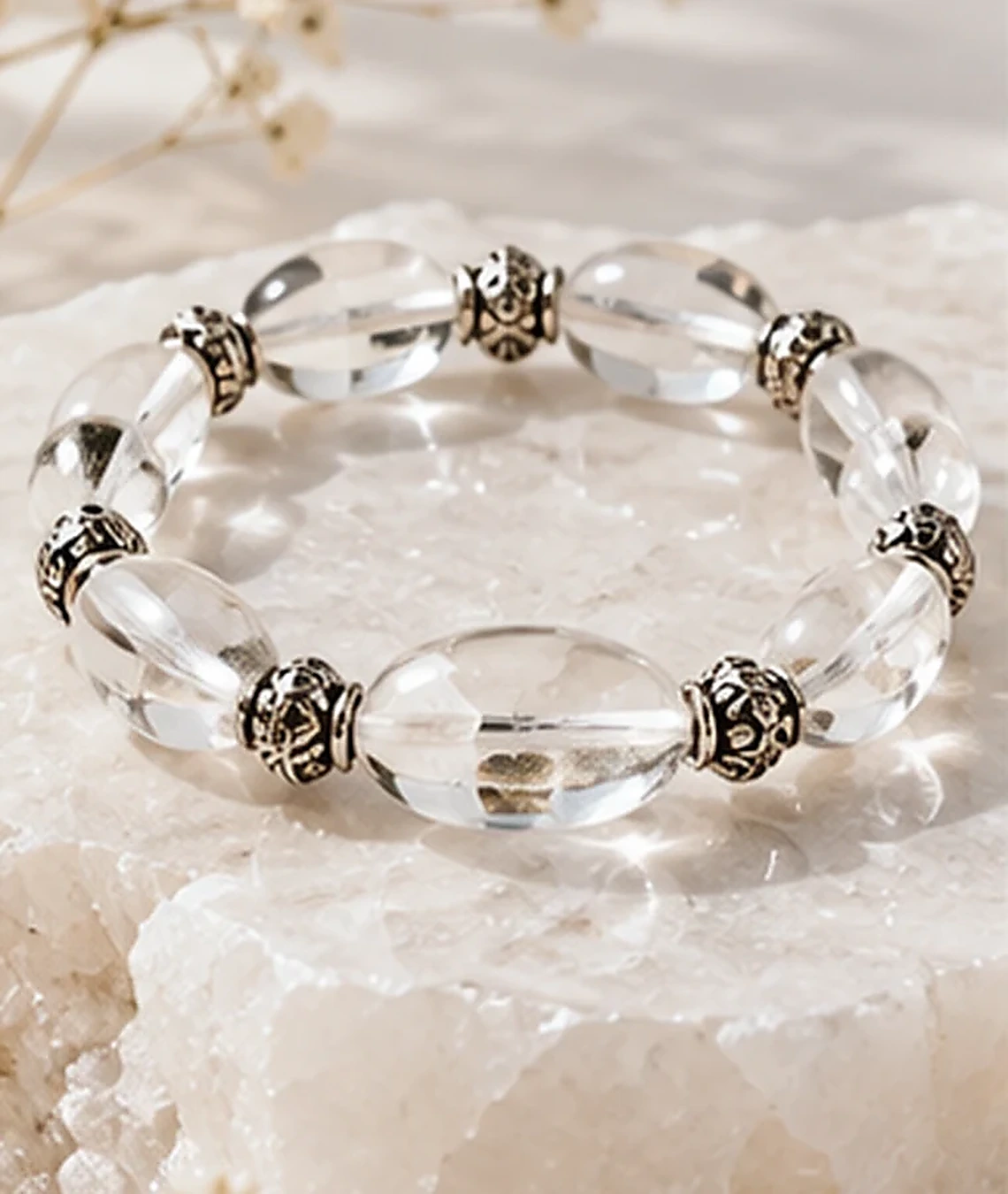
Bead diameter changes much more than appearance. It affects the number of beads, finished weight, inner space, movement and how easily a crystal bracelet layers with a watch or other jewelry. The reference figures below are useful for comparison, but custom sizing should still begin with an actual wrist measurement.
Finished single-strand bracelet reference
| Bead diameter | Reference finished length | Approx. bead count | Approx. weight |
|---|---|---|---|
| 4 mm | 17–18 cm | 43–45 | 6–9 g |
| 6 mm | 17–18 cm | 28–29 | 10–17 g |
| 8 mm | 18–19 cm | 22–23 | 17–30 g |
| 10 mm | 19–20 cm | 18–19 | 28–47 g |
| 12 mm | 20–21 cm | 16–17 | 43–73 g |
| 14 mm | 21–22 cm | 14–15 | 59–100 g |
| 16 mm | 22–23 cm | 13–14 | 82–140 g |
| 18 mm | 22–23 cm | 13–14 | 100–170 g |
These figures come from a production reference chart and describe typical finished examples, not fixed sizing rules. The listed lengths increase with bead size partly because larger beads take more internal space. A personalized bracelet should be calculated from the wearer’s wrist, preferred fit and actual components.
Which bead size is best for you?
4 mm: delicate and easy to layer
Four-millimetre beads create a fine jewelry look and sit easily beside a watch. They use many beads, so subtle color transitions can look especially detailed. The small holes and fine elastic require careful construction and gentle handling.
6 mm: light and understated
Six-millimetre beads remain lightweight while making the stone color easier to see. This size suits small wrists, minimalist styling and multi-bracelet stacks without adding excessive weight.
8 mm: the versatile everyday scale
Eight-millimetre beads are a common balance between presence, comfort and material visibility. They work well for single-strand designs and are a practical starting point when the wearer has no strong size preference.
10–12 mm: strong visual presence
Ten- and twelve-millimetre beads show inclusions, translucency and color zoning more clearly. They also require more wrist allowance and weigh noticeably more, especially in dense materials.
14–18 mm: statement scale
Large beads create a bold silhouette and fewer beads are needed around the wrist. Comfort depends heavily on stone density, wrist size and activity. These sizes are less convenient under tight sleeves and may move more during desk work.
Approximate loose-strand reference
For a typical 35–38 cm loose strand, the reference chart estimates about 170–190 beads at 2 mm, 105–125 at 3 mm, 80–95 at 4 mm, 58–63 at 6 mm, 43–47 at 8 mm, 35–38 at 10 mm, 29–31 at 12 mm, 25–27 at 14 mm, 21–23 at 16 mm, 20–21 at 18 mm and 18–19 at 20 mm. Pearls, irregular cuts and specialty drilling can differ substantially.
Why weight varies even at the same size
Minerals have different densities. A strand of quartz, obsidian, tiger’s eye and a lightweight imitation can share the same bead diameter yet have different weights. Metal spacers, charms, hollow components and bead shape also matter. Weight alone cannot authenticate a crystal, but an unexpectedly large difference is a reason to ask for clearer material disclosure.
Choose size by lifestyle, not trend
- Typing and desk work: 4–8 mm usually interferes less with wrist movement.
- Layering: choose one larger focal strand or several lighter 4–6 mm strands.
- Visible natural patterns: 10 mm and above make inclusions easier to appreciate.
- Lightweight daily wear: compare actual finished weight, not diameter alone.
- Gift buying: 8 mm is a practical default only when accurate wrist sizing is also available.
Pair the bead size with the right wrist measurement
Do not select the bracelet length from this table alone. First follow the wrist measurement guide, then tell the maker your preferred fit and bead diameter. For a customized color story, combine the sizing decision with the Five Elements color guide.
How this guide was prepared
Author: CC, CRYSTALS ENERGY editorial team. Published: November 2, 2026. Review schedule: Reviewed weekly for sizing accuracy, material wording and responsible presentation of cultural symbolism.
Source basis: Practical sizing data in these guides is adapted from the supplier reference chart supplied for this article series. Five Elements content uses the supplied 60 Jiazi/Na Yin cultural reference. Measurements, bead counts and weights are approximate; meanings are cultural and lifestyle interpretations rather than medical, financial or predictive advice.
Additional reference sources
Frequently asked questions
What is the most versatile crystal bracelet bead size?
Eight millimetres is a common everyday starting point because it balances visibility, weight and wearability, but the best choice depends on wrist size and personal style.
Do larger crystal beads make a bracelet fit tighter?
Yes. Larger beads take more internal space, so the same outside or cord length can produce a smaller usable inner circumference.
How many 8 mm beads are in a bracelet?
A production reference estimates about 22–23 beads for an 18–19 cm single-strand bracelet. Spacers, charms, wrist size and actual bead diameter change the count.
Does bracelet weight prove a crystal is genuine?
No. Mineral density can help explain expected weight differences, but weight alone cannot authenticate a stone. Use accurate seller disclosure and, when needed, gemological testing.
Explore Five Elements Crystal Bracelets
Browse five complete catalog collections. Each bracelet is US$70, and private customization is available for wrist fit, bead size and color direction.
View US$70 catalogs & customization →