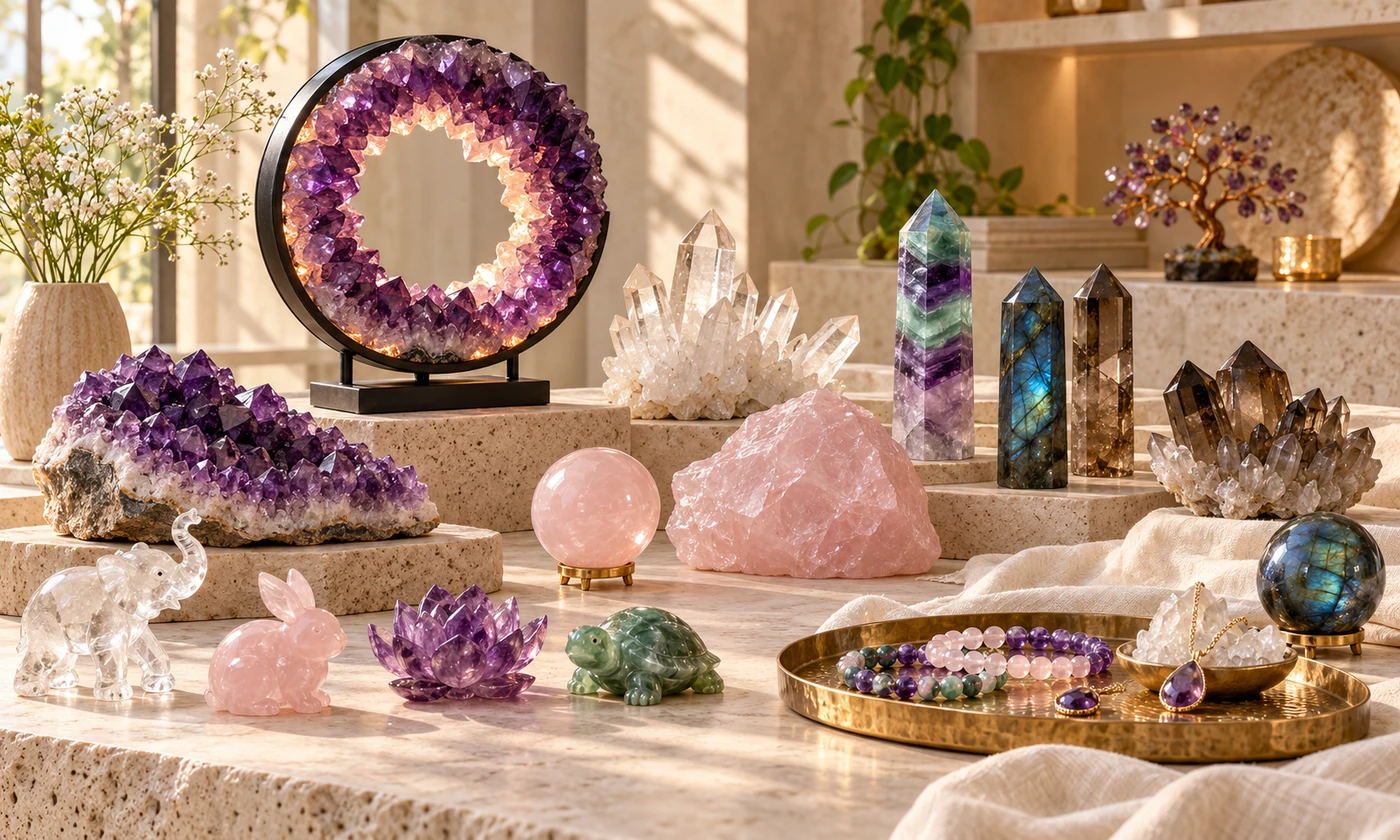
The safest crystal-care routine is simple: wipe gently, keep the bracelet dry and store it away from impact, chemicals and long periods of direct sunlight. “Cleansing” can mean physical cleaning or a personal symbolic ritual, so it helps to separate the two.
Start with the material list
Natural stone is not one material. Quartz varieties are generally harder than stones such as calcite, fluorite or selenite, while surface coatings, dyed beads, gold-toned spacers and elastic cord each have different limits. If you are unsure what the bracelet contains, choose the least aggressive method and ask the seller before soaking or using a cleaner.
A gentle physical-cleaning routine
- Remove the bracelet before showering, swimming, exercising or applying fragrance and lotion.
- After wear, wipe the beads and metal parts with a clean, soft, dry microfiber cloth.
- For a suitable water-resistant bracelet, use a barely damp cloth rather than full immersion.
- Dry immediately and allow the cord to air-dry completely before storage.
Do not use bleach, alcohol, ultrasonic machines, abrasive paste or household jewelry dip unless the maker has confirmed compatibility with every component.
Why soaking is not a universal method
Water can enter small drill holes, weaken some coatings, dull delicate minerals, affect adhesives and shorten the life of elastic. Salt water is even riskier because salt crystals may scratch a surface or corrode metal. A short video recommending salt or running water cannot account for your bracelet's exact construction.
Sunlight, moonlight and symbolic cleansing
Some owners enjoy placing jewelry near a window, resting it beside a meaningful object or using a quiet breathing practice to mark a fresh intention. These are personal rituals, not physical decontamination. Prolonged sunlight can fade amethyst and some other stones, while heat and UV exposure may age elastic. If you use moonlight, keep the bracelet indoors in a dry, secure place rather than leaving it outside overnight.
Store bracelets to reduce scratches
Place each bracelet in its own soft pouch or compartment. Harder beads can scratch softer stones, and metal edges can mark polished surfaces. Avoid humid bathrooms, hot cars and open shelves near sprays or cleaning products. Lay elastic bracelets flat instead of hanging them under tension.
Check the cord before each wear
Look for fraying, thinning, stiff sections or gaps that reveal stretched elastic. Roll the bracelet gently over the hand instead of pulling it wide. If the cord appears tired, have it restrung before it breaks. Regular inspection matters more than any elaborate cleansing routine.
Frequently asked questions
Can every crystal bracelet be washed in water?
No. Some stones, coatings, metal parts and cords can be damaged by water or soaking. Follow material-specific instructions.
Can I leave a crystal bracelet in sunlight?
Avoid prolonged direct sunlight. Some stones and dyed materials may fade, and heat can stress elastic cord.
How should I store a crystal bracelet?
Store it dry in a soft pouch or lined box, separate from harder jewelry that may scratch the beads.
Choose a Bracelet Made for Everyday Meaning
Explore the five symbolic color stories and review product details before ordering.
Explore Five Elements →