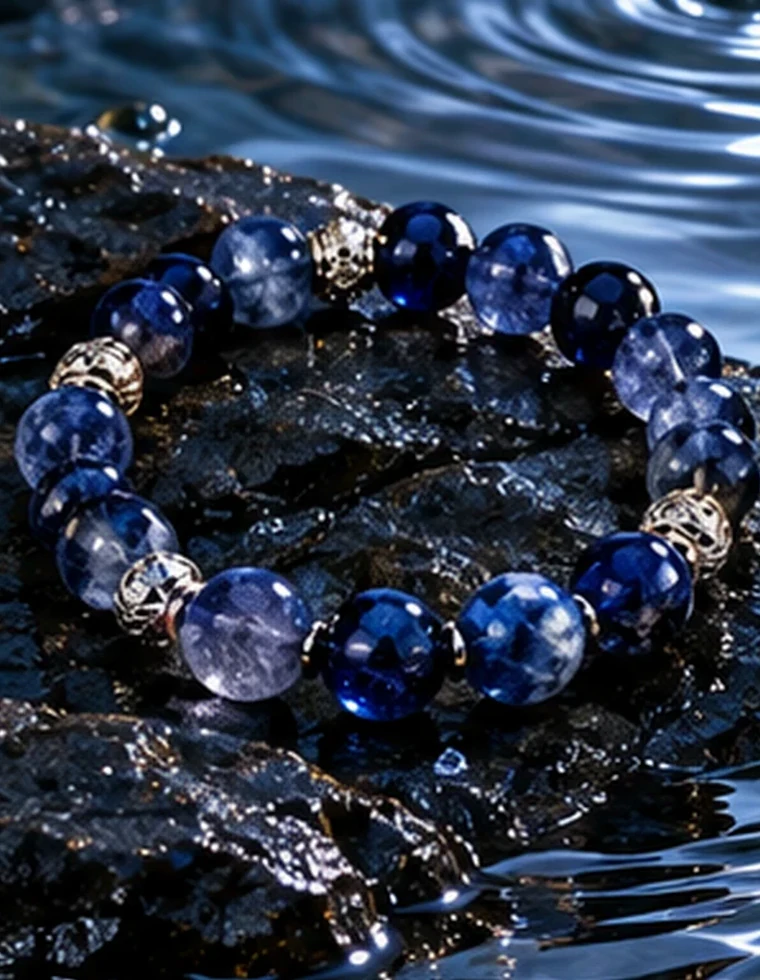
Five Elements crystal colors provide a simple visual guide: green for Wood, red for Fire, golden brown for Earth, clear white for Metal and blue or black for Water. These palettes express cultural symbolism rather than medical effects. Choose a color by meaning, verified material, wardrobe and personal intention instead of expecting a guaranteed outcome.
Wood: green and blue-green
Wood is commonly connected with spring, growth, flexibility and direction. Green beads can evoke leaves, new shoots and steady development. In jewelry, mossy, jade-like and forest tones feel organic and work naturally with cream, tan, denim and other earth-inspired neutrals.
Fire: red, coral and vivid pink
Fire suggests warmth, visibility, passion and transformation. Red and pink stones make a strong focal point, whether the bracelet is worn alone or paired with restrained gold-toned details. For a softer interpretation, choose dusty rose or translucent berry rather than the brightest red.
Earth: yellow, honey and brown
Earth represents stability, nourishment and centered presence. Honey, ochre, sand and warm brown beads can feel grounded without looking heavy. These colors pair easily with beige, ivory, olive and camel, making Earth-inspired bracelets especially versatile in an everyday wardrobe.
Metal: white, clear and metallic
Metal is associated with clarity, structure, refinement and discernment. Clear, milky white and silver-toned materials create a clean visual rhythm. Polished spacers can emphasize precision, while translucent beads keep the design light. Check whether metallic details are plated and follow their care instructions.
Water: blue, navy and black
Water evokes reflection, depth, adaptability and flow. Pale blue feels airy and quiet; navy and black create a more dramatic, contemplative palette. Water colors combine well with grey, white and silver, and they can act as a calm counterpoint to warm Fire or Earth tones.
Why do these crystals fit Five Elements colors?
These crystal and color choices suit Five Elements colors because they translate an abstract cultural theme into a wearable visual reminder. The relationship is symbolic rather than medical or predictive. Material identity, personal style, comfort and responsible product information should guide the final choice.
How do the crystal choices compare?
| Element or type | Crystal or material | Symbolic meaning | Best used as |
|---|---|---|---|
| Wood | Green aventurine, moss agate or jade-style stone | growth, direction and flexibility | new projects, learning and renewal |
| Fire | Carnelian, red agate or rose quartz | expression, warmth and transformation | creative work, visibility and celebration |
| Earth | Tiger's eye, citrine or yellow agate | stability, nourishment and practical abundance | routines, home and long-term plans |
| Metal | Clear quartz, white agate or howlite | clarity, structure and discernment | organization, editing and focused decisions |
| Water | Sodalite, lapis lazuli or black onyx | reflection, adaptability and depth | journaling, transitions and quiet study |
What are the materials, size, origin and wholesale terms?
- Materials
- Representative collection materials include green aventurine, carnelian, tiger's eye, clear quartz, sodalite and complementary stones selected for each color story.
- Size
- Standard reference: approximately 8 mm round beads on elastic, fitting an approximately 16-18 cm wrist. Custom bead and bracelet sizes are available by quotation.
- Production origin
- Designed, assembled and quality-checked in Donghai County, Jiangsu, China. Geological stone origin varies by mineral and production batch.
- Care
- Wipe with a soft dry cloth. Remove before bathing, swimming, exercise or cleaning. Avoid perfume, chemicals, hard impact, soaking and prolonged direct sunlight.
- Wholesale MOQ
- Standard reference: 50 pieces per design. Mixed assortments and custom specifications are confirmed in the final quotation.
- Packaging
- Individual recyclable paper box with a care card. Private-label cards, stickers and branded packaging are available by quotation.
- Lead time
- Samples: usually 7-10 business days. Bulk production: usually 15-25 business days after sample approval and deposit. The signed quotation controls final timing.
How the element colors work together
The Five Elements are understood through relationship and change. Wood feeds Fire; Fire creates Earth through ash; Earth bears Metal; Metal can support the collection of Water; Water nourishes Wood. Other relationships regulate excess. A multi-color bracelet can therefore represent the complete cycle rather than a single dominant element.
Choose a palette you will actually wear
Begin with the element meaning that resonates, then test the color beside your skin tone and usual clothing. Consider bead size, translucency and polish as well as hue. If a symbolic color feels difficult to wear, use it as a small accent instead of forcing an all-red or all-blue design.
Who wrote and reviewed this guide?
Author: CC, CRYSTALS ENERGY editorial team. Updated: October 24, 2026. Review schedule: CC reviews this article every week for material descriptions, care guidance, sourcing facts and responsible lifestyle wording.
Editorial review: Symbolic meanings are presented as cultural and personal-reflection traditions. The article does not claim that crystals diagnose, prevent, treat or cure a medical condition, or guarantee luck, money, love or protection.
Reference sources
Frequently asked questions
Which colors represent the Five Elements?
Common associations are green for Wood, red for Fire, yellow or brown for Earth, white or metallic for Metal, and blue or black for Water.
Can one bracelet contain several element colors?
Yes. The Five Elements form an interconnected system, so mixed palettes can express relationship and balance.
Do crystal colors guarantee a result?
No. Color meanings are symbolic and cultural; jewelry does not guarantee health, wealth or other outcomes.
See the Five Palettes Together
Compare every element bracelet in the full balance collection.
Shop by element →